2026 IANG Visa Complete Guide: First Application, Renewal Process, Rejection Reasons and Pitfall-avoidance Tips (Essential Reading for Hong Kong Graduates)
If you are a non-local graduate studying a full-time degree programme at a Hong Kong university, the IANG visa (Immigration Arrangements for Non-local Graduates) is the key route for transitioning from student status to the workplace. Every year, thousands of graduates stay and develop their careers in Hong Kong through this arrangement, yet many have their applications rejected or their visas interrupted because they fail to understand the latest policies, overlook document details or miss critical deadlines. This article will set out the complete IANG visa process from first application to renewal, covering eligibility criteria, required documents, application steps, processing times and common rejection reasons, and offer practical pitfall-avoidance advice tailored to the latest 2026 policy to help graduates in Hong Kong smoothly maintain lawful working status. Whether you are about to graduate or already hold an IANG visa and are planning a renewal, this guide will help you avoid detours and stay in Hong Kong to build your career with peace of mind.
What Is an IANG Visa? Who Is Eligible to Apply?
The IANG visa, formally the “Immigration Arrangements for Non-local Graduates”, is a visa category established by the Hong Kong Immigration Department for non-local graduates. As long as you are a non-local student who has completed a full-time, locally accredited programme in Hong Kong and obtained a bachelor’s degree or higher qualification, you may apply to stay in Hong Kong and will normally be granted an initial stay of 24 months on time limitation only, without other conditions of stay. Successful extension applicants are normally permitted to remain on a 3-3 year pattern, and after ordinarily residing in Hong Kong for a continuous period of not less than seven years you may apply for the right of abode in accordance with the law.
Eligibility Criteria for the First Application
To successfully apply for an IANG visa, all three of the following basic conditions must be met:
- Eligible programme: A full-time, locally accredited bachelor’s degree or higher academic programme completed in Hong Kong (associate degrees and higher diplomas do not count; it must be a degree programme).
- Non-local status: The applicant must be a non-permanent resident of Hong Kong and, at the time of application, normally reside outside Hong Kong, or be in Hong Kong but staying as a student.
- Submission deadline: The application must be submitted within six months of the date of graduation (i.e. the date stated on the graduation certificate for the conferred degree) to qualify under the “newly graduated non-local graduate” category, with no need to have secured employment at the time of submission. If the six-month window is exceeded, the application falls under the “returning non-local graduate” category, in which case you must already be employed and the position must be related to your qualification, with pay and benefits reaching market level.
Many students mistakenly believe they cannot job-hunt before formalities are completed. In fact, as long as you submit within six months of graduation, you may lawfully remain in Hong Kong on your “student visa / conditional stay” and switch to working status immediately once the application is approved. Therefore, seizing this six-month golden window is the first step to staying in Hong Kong successfully.
Documents Required and Application Steps for the First IANG Visa Application
The first step in “setting out the complete IANG visa process from first application to renewal” is to prepare a flawless set of application documents. The Immigration Department is quite strict about document requirements; any omission or error may delay processing or even lead to rejection.
Required Document Checklist (Latest 2026 Version)
- Application Form ID 990A: The “Immigration Arrangements for Non-local Graduates” form, fully completed and signed.
- One recent photo: 40mm x 50mm, white background, affixed to the designated position on the form.
- Valid travel document: Copies of the personal particulars page, visa page (if any) and the most recent entry label.
- Copy of Hong Kong identity card (if applicable).
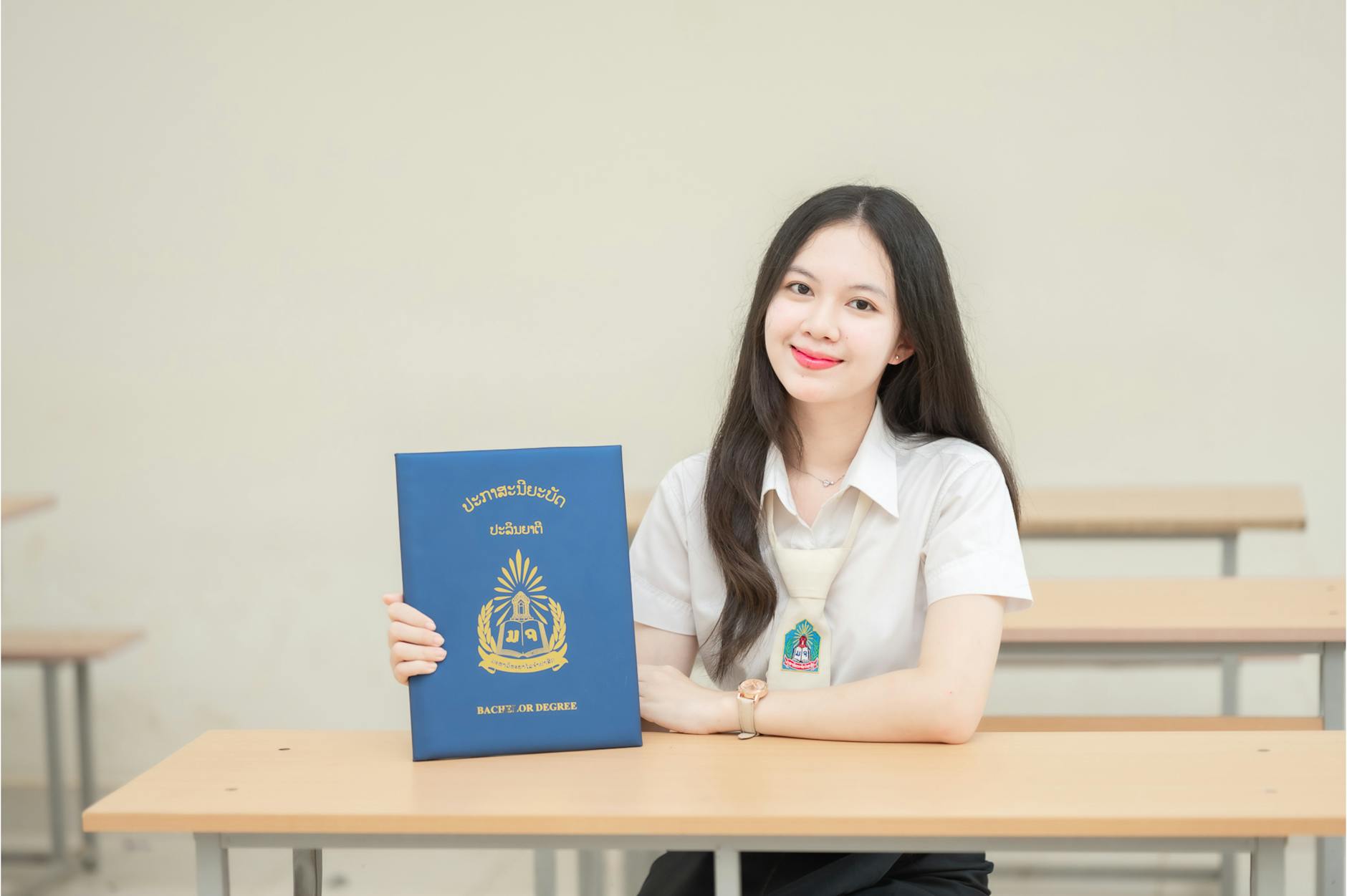
- Proof of study: Graduation certificate or a provisional graduation confirmation letter issued by the institution, clearly stating that the holder has been awarded a degree and the graduation date.
- Exit-entry Permit for Travelling to and from Hong Kong and Macao and endorsement pages (for mainland residents).
- Financial proof (in individual cases): If required by the Immigration Department, you must provide bank statements or employer confirmation that can support your living expenses in Hong Kong.
In addition, if you are applying as a “returning non-local graduate”, you must also attach an employment contract, a copy of the company’s business registration certificate and an employment confirmation letter issued by the employer, detailing the position, salary and job duties.
Step-by-step Application Walkthrough
Step 1: Book online or submit by post You may submit your application through the Immigration Department’s electronic services platform (applicable to forms with digital signatures), or post the full set of documents to “Receipt and Despatch Unit, Immigration Department, 2nd Floor, Immigration Tower, 7 Gloucester Road, Wan Chai, Hong Kong”, or submit in person at the Quality Migrant and Mainland Residents Section. From 2026, the Immigration Department has further simplified the online submission process; when uploading documents, ensure the scans are clear and each file does not exceed 5MB.
Step 2: Wait for the Immigration Department’s acknowledgement letter After normal receipt, the Immigration Department will issue an acknowledgement letter within about one to two weeks, containing the application file number. You can use this number to check the application progress online.
Step 3: Submission of supplementary documents and verification During assessment, the Immigration Department may request additional documents, such as a missing graduation certificate or an updated passport copy. You must respond within the specified deadline; otherwise the application may be put on hold.
Step 4: Collect the visa label Once approved, the Immigration Department will issue a payment notice. After paying HK$230, you will receive an electronic visa or a physical label. Mainland permit holders must also use this label to apply for the relevant visit endorsement to Hong Kong at the mainland public security authorities before the IANG visa can be formally activated.
If all documents are complete, the whole process is generally completed within two to four weeks. However, May to August each year is the peak season for graduate applications, and processing time may be extended to six to eight weeks, so graduates are advised to apply as soon as they receive their results and graduation proof to avoid the rush.
IANG Visa Renewal: Key Timelines and 2026 Policy Adjustments
The initial stay is normally 24 months, and most people will then embark on the renewal path — the stage most prone to problems across the whole process. “Setting out the complete IANG visa process from first application to renewal” must address the core requirement for renewal — you must be employed, and the position held must match your academic background, with pay reaching the market average. The Immigration Department also states that not all applications for extension of stay will be approved.
Renewal Pattern and Application Window
Under the Immigration Department’s current arrangement, successful extension applicants are normally permitted to remain on a “3-3 year” pattern. An extension should be applied for within three months before the limit of stay expires, as early as possible and in any case at least six weeks before expiry; processing normally takes about two to three weeks after all required documents and the fee are received. While waiting for a result, you must leave Hong Kong before your limit of stay expires unless the Director of Immigration has approved otherwise in special circumstances.
Core Documents Required for Renewal
Renewal documents are more complex than for the first application, with the focus on proving that your employment relationship is genuine and meets Immigration Department standards:
- Completed Form ID 91 (Application for Extension of Stay)
- Current valid travel document and IANG visa page
- Copy of Hong Kong identity card
- Employment contract (stating position, monthly salary and employment period)
- Salary payment records and bank statements for the most recent three months
- Mandatory Provident Fund (MPF) contribution records (showing employer and employee contributions)
- Company business registration certificate and company profile
- If self-employed, you must submit the business registration certificate, audited report for the most recent year, profits tax return and proof of business transactions, etc.
A new change in 2026 is that the Immigration Department places greater emphasis on “whether the salary is reasonable” and “whether the position is academically relevant”. For example, if you hold a master’s degree in marketing but are hired as an administrative assistant with a monthly salary below HK$18,000, the Immigration Department may question whether the position truly requires a university degree, and reject the renewal on the grounds of “not meeting professional level”. Therefore, even at the job-hunting stage, you should consciously link your academic background, job duties and salary together to pave the way for future renewals.
In-depth Analysis of Processing Times and Common Rejection Reasons
To successfully extend your IANG visa, you must be clear about processing times and the pitfalls. Generally, renewal processing takes about four to six weeks, but during the summer peak or when the Immigration Department requests supplementary documents, it may be extended to eight weeks. Applicants can check progress online; if there is no news after eight weeks, you may politely enquire with the Immigration Department by email or in person, but avoid frequent chasing.
Below are the most common rejection reasons over the past year, all of which can be avoided with careful preparation:
- Unstable employment relationship: A part-time contract, short-term contract or one shorter than three months will lead the Immigration Department to conclude that the applicant cannot be stably employed in Hong Kong.
- Salary far below market level: With reference to the median monthly employment earnings published by the Census and Statistics Department each quarter, if your monthly salary is clearly below the prevailing level for the same qualification and industry, and you lack a reasonable explanation, the application will be rejected outright.
- Forged or inconsistent documents: Submitting a fake contract or bank records, or providing information inconsistent with previous declarations, will not only lead to rejection but may also constitute a criminal offence.
- No continuous employment: A lengthy unemployment gap without a reasonable explanation (such as further study or family reasons) easily leads the Immigration Department to question your intention to remain in Hong Kong.
- Failure to submit the renewal application on time: Submitting after the visa has expired constitutes overstaying; even if you submit immediately, it leaves an adverse record that affects future assessments.
- Insufficient business evidence for the self-employed: Merely buying and selling a small volume of goods online, with no fixed business address or extremely low business income, makes it hard to convince the Immigration Department that this is a genuine commercial activity.
By understanding these rejection minefields, you can avoid risks early and steadily “set out the complete IANG visa process from first application to renewal”, so that small slip-ups do not turn into big troubles.
Practical Pitfall-avoidance Tips for the Latest 2026 Policy
In 2026, the Immigration Department has further tightened several details. Graduates must update their understanding promptly to succeed with their applications and renewals at the first attempt. Below, based on real situations, are five core pitfall-avoidance tips:
Pitfall 1: Submit Your Application Within Six Months of Graduation with “No Gap”
Many students think they must wait for the graduation ceremony or the paper graduation certificate before applying, wasting valuable time as a result. In fact, as long as the institution issues a provisional graduation confirmation letter, this can serve as valid proof. Submitting early not only reduces stress but also avoids an “identity gap” caused by processing delays — once your student visa expires but the IANG is not yet approved, you may need to leave Hong Kong and wait, disrupting a job you have already arranged.
Pitfall 2: Ensure Contract Terms Align with Immigration Department Standards
Before signing the offer letter, compare it against the Immigration Department’s internal guidelines: does the position require a relevant degree? Can the salary support independent living in Hong Kong? If the monthly salary is close to or below HK$18,000–20,000, it is best for the employer to explain in the employment letter why the position needs to be filled by someone with a bachelor’s / master’s qualification, and that pay will be adjusted after the probation period. Such supplementary explanations help persuade the Immigration Department.
Pitfall 3: Keep Complete Employment Records and Personal Files
From the first application to each renewal, it is advisable to build a dedicated “visa file” organising all contracts, salary proofs, MPF contribution records, performance appraisals and tax bills. When the Immigration Department requests supplementary documents, you can respond quickly and avoid missing the deadline due to scattered information.
Pitfall 4: Self-employed or Entrepreneurs Should Plan One Year Ahead
If you plan to renew as self-employed, you must understand that the Immigration Department will examine at least one full year of operating records. This means you should start registering a company, opening a business bank account, building a client network and keeping transaction receipts from the very start of your initial 24-month stay. Do not rush to set up an empty-shell company just a few months before renewal — this will almost certainly be rejected.
Pitfall 5: Note the Linkage Between Mainland Permits and Endorsements
Applicants with mainland resident status, after collecting the IANG electronic visa, must still return to the mainland exit-entry authorities to apply for the “D” stay endorsement on the Exit-entry Permit for Travelling to and from Hong Kong and Macao. Even if the IANG is approved, you must not start working before the mainland endorsement is completed. In addition, the permit’s validity must be at least six months longer than the approved visa period; otherwise the Immigration Department will only grant a shorter period up to the permit’s expiry, disrupting the renewal rhythm. Therefore, when planning renewal, check the permit’s validity together and allow enough time to renew the permit.
Frequently Asked Questions (FAQ)
Q: If I cannot find a job within six months of graduation, can I still apply for the IANG visa first?
A: Yes. Newly graduated non-local graduates applying within six months of graduation do not need to have secured employment beforehand. Once approved, you will normally be granted 24 months of stay, during which you can job-hunt or work in Hong Kong, and before it expires you can then look for a suitable job according to the renewal requirements.
Q: Can I reapply immediately after a renewal rejection?
A: If the rejection is due to incomplete documents or insufficient explanation, you may address the reasons given by the Immigration Department, supplement the information, and resubmit before your visa expires. But if you have already overstayed, the situation becomes complicated; it is advisable to seek legal advice immediately or contact the Immigration Department to enquire about a solution.
Q: During the IANG visa period, can I go abroad for further study or work briefly outside Hong Kong?
A: A short departure of less than six months generally does not affect future renewal or permanent residency eligibility, but you must watch the visa expiry date and ensure the visa remains valid upon return to Hong Kong. If you are away from Hong Kong working for a long time, the Immigration Department may ask you to explain the reason for leaving and your ties to Hong Kong when you renew.
Q: Is renewal harder from 2026? Rumours say a minimum income threshold will be introduced?
A: The Immigration Department has not announced a hard minimum monthly salary figure, but scrutiny has clearly tightened. What matters is the relevance of the position to your qualification, salary at market level, and a stable continuous employment record. Rather than worrying, communicate contract details with your employer early to ensure requirements are met.
Q: Does changing jobs directly affect renewal?
A: As long as the new job has started at the time of renewal application and meets Immigration Department requirements (position relevant, salary reasonable), and you provide the new company’s employment contract and related proof, changing jobs in itself will not be a ground for rejection. But if you change jobs too frequently, leading the Immigration Department to consider employment unstable, there is some risk.
Conclusion: Plan Ahead and Hold Every Key Milestone
“Setting out the complete IANG visa process from first application to renewal, covering eligibility criteria, required documents, application steps, processing times and common rejection reasons, and offering practical pitfall-avoidance advice tailored to the latest 2026 policy to help graduates in Hong Kong smoothly maintain lawful working status.” This is not just a search keyword, but a required course for every non-local graduate building a career in Hong Kong.
The most valuable resource throughout the process is time. Never wait until the last moment before your visa expires to start, and never take any step lightly. From preparing graduation proof, the first application, finding a compliant job, to updating documents for each renewal, every step requires early planning. Although the 2026 policy environment is more challenging, as long as you master the right information and avoid the common traps mentioned in this article, most graduates can still smoothly follow the IANG route towards a long-term career and life in Hong Kong. We wish every Hong Kong talent the peace of mind to strive and inject more vitality into this international metropolis of Hong Kong.